

The Somaliland Food Systems Resilience Project (SL-FSRP), under the Ministry of Agricultural Development and funded by the World Bank, held a Gender-Based Violence (GBV) and Gender Mainstreaming training for representatives of line ministries on September 8, 2025, at Baraar Hotel, Hargeisa. The training was prepared and facilitated by Hamda Adan Ahmed (GBV Specialist, PCU).

Purpose and Objectives
The training aimed to:
- Equip participants with knowledge and practical tools for Gender Mainstreaming and GBV/SEA (Sexual Exploitation and Abuse) prevention, identification, and reporting.
- Strengthen understanding of the Grievance Redress Mechanism (GRM), Code of Conduct (CoC), and Standard Operating Procedures (SOPs).
- Promote community awareness and institutional collaboration on GBV issues.
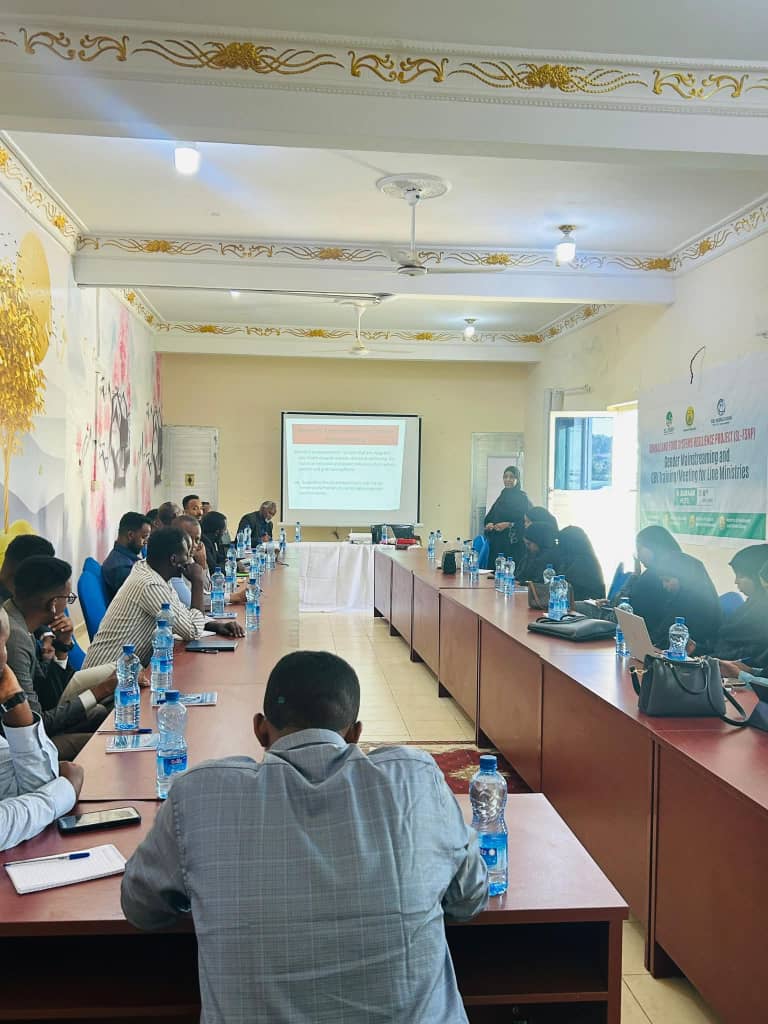
Participants
25 participants attended from three line ministries:
- Ministry of Agricultural Development (MoAD)
- Ministry of Livestock and Rural Development
- Ministry of Environment and Climate Change
Participants included staff from policy, planning, M&E, and implementation departments.
Training Content and Methodology
The training used a participatory and interactive approach with presentations, group work, discussions, case studies, and role-plays.
Key topics covered included:
- Key gender concepts (sex, gender roles, intersectionality)
- Overview of GBV/SEA—types, causes, and impacts
- Gender Mainstreaming—definition, importance, and integration in project planning, budgeting, and M&E
- Policy frameworks—national/international laws, project CoC, SOPs, and reporting mechanisms
Participants also shared experiences and challenges, notably the lack of dedicated gender units within ministries, limiting effective gender mainstreaming.
Key Outcomes
- Enhanced understanding of GBV, gender concepts, and gender-sensitive project implementation.
- Identification of gender gaps within ministries and commitment to address them.
- Strengthened inter-ministerial collaboration on GBV prevention and response.
- Increased awareness of reporting mechanisms and institutional accountability.
Challenges and Recommendations
Challenges identified:
- Limited time for in-depth learning (one-day session).
- Resource constraints within ministries.
- Absence of gender focal points or departments.
Recommendations:
- Conduct regular refresher trainings and capacity-building workshops.
- Assign dedicated gender officers in each ministry.
- Institutionalize gender analysis in all planning, reporting, and budgeting activities.
- Establish a monitoring framework to track progress on gender mainstreaming and GBV response.
Conclusion
The training successfully raised awareness and built foundational capacity among ministry officials to integrate gender considerations and address GBV within the FSRP. Sustained institutional commitment and follow-up actions are essential for achieving meaningful gender equality and safer work environments.
Next Steps
Following the initial launch, the GBV training will be integrated into all FSRP community engagement activities. Regular monitoring and evaluation will help us assess the program's impact and make necessary adjustments to ensure its effectiveness.
We believe that this initiative represents an important step toward creating safer, more resilient communities where all members can participate fully in building sustainable food systems.


